
 English
  Spanish
The ABCs of DROs
Introduction
ACU-RITE SOLUTIONS’ readouts are systems for the manual machine tool industry. The primary benefit is saving time and increased productivity. The addition of a readout system on any machine allows for reduced scrap due to the elimination of measuring inaccuracies.
Machine operators are relieved of tedious setup, positioning, and checking operations so more time is spent machining. Training is easier and faster, elevating less-experienced operators to obtain optimum production levels in a shorter time. The return on investment (ROI) on savings averages less than 30 days.

What is a DRO and how does it work?
A simple way to view a DRO is as a communication device between the operator and the machine tool. The focus of information communicated by the DRO is the measurement of the movement of the machine table stated in terms of direction, distance and location. Direction is expressed in terms of left or right (X-axis), front to back (Y-axis) and up or down (Z-axis). Distance is in terms of the drawing dimension. Location is defined in terms of an actual point at which measuring takes place. The DROs function is to display the changes in these positions as a workpiece is moved.

Why are they used?
With the greater positioning accuracy of the system, the inherent accuracy of the machine tool is used to full advantage. Therefore, the likelihood of producing scrap parts is greatly reduced. The time the operator used to spend setting the coordinates for positioning is now spent machining more parts. This translates into greater operator efficiency and in turn, increased productivity. The results are savings in operating expenses and therefore a more profitable shop.
Aside from the elimination of positioning problems, there are other operator-oriented benefits. For example, there is no longer a need to do paper-and-pencil calculations for offsets or other dimensions that may not appear on the drawing since exact positioning is displayed on the DRO.
Another is the reduction in operator fatigue associated with counting hand wheel turns and straining to read verniers, a factor that frequently affects operator performance and satisfaction.
Lastly, a digital measuring system makes training of new or less-experienced operators much easier and less time consuming.
How and where are they used?
Some typical applications for ACU-RITE SOLUTIONS’ readout systems
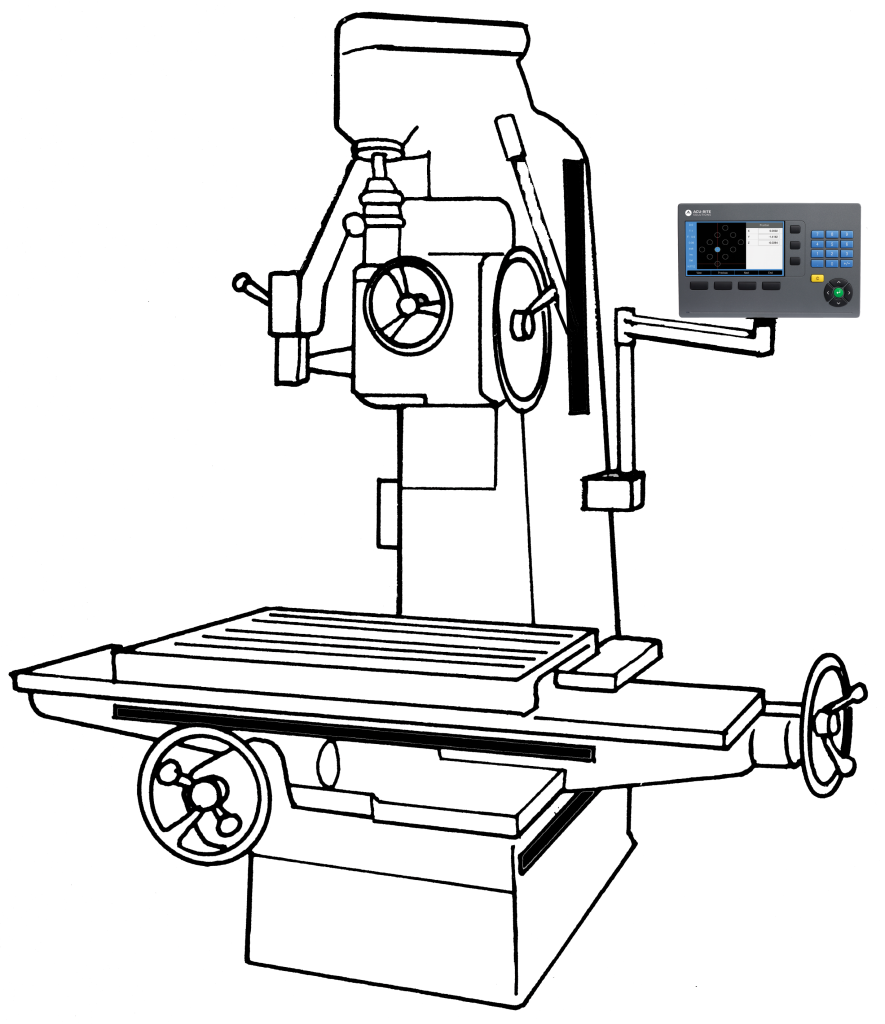
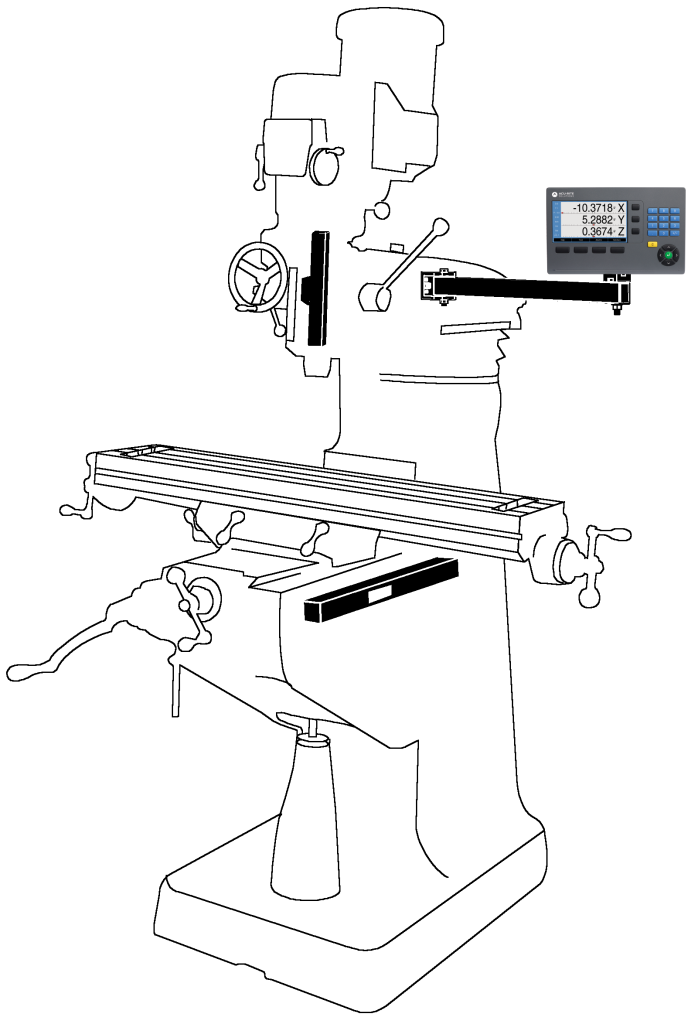
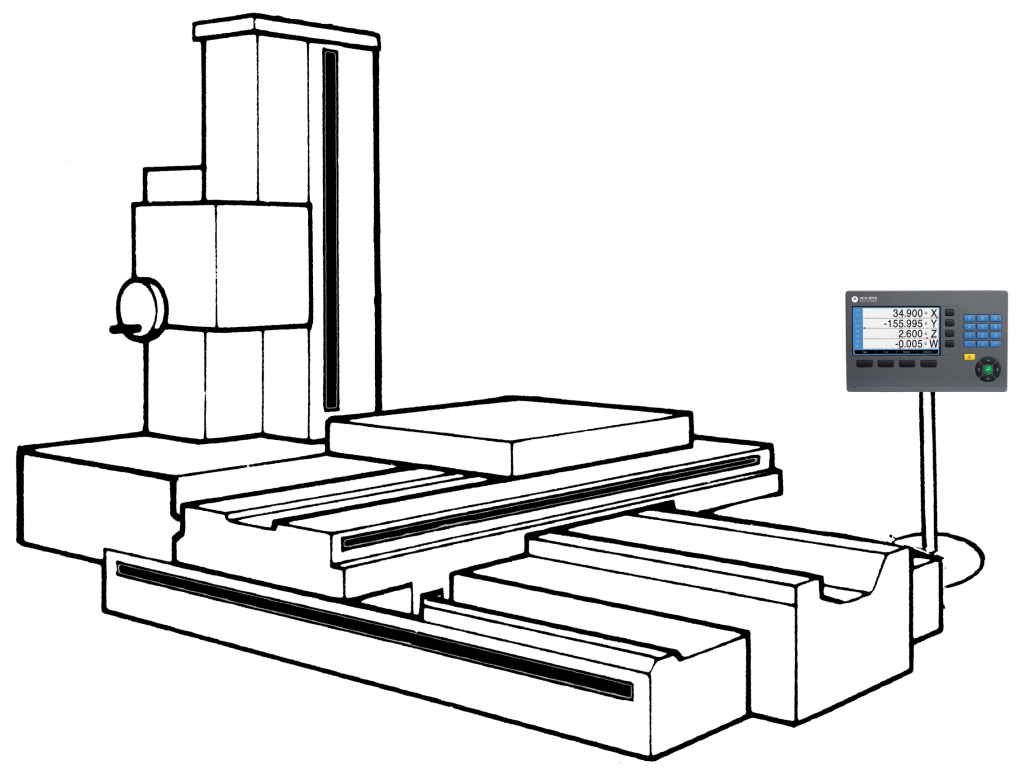
Milling
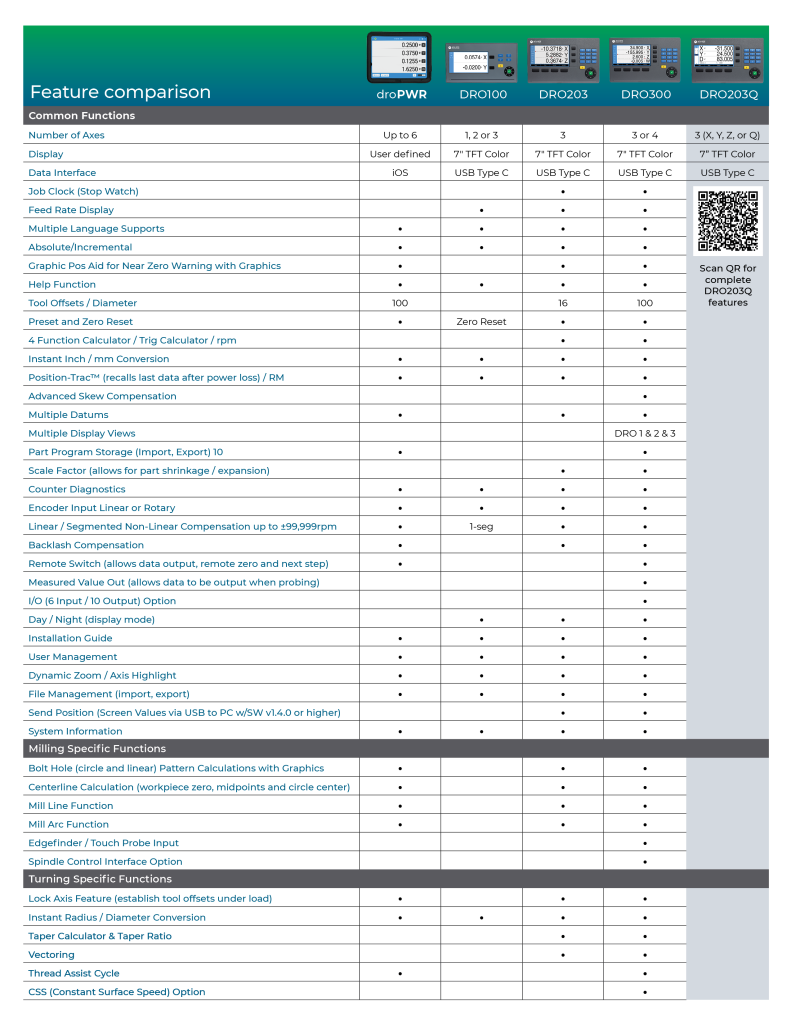
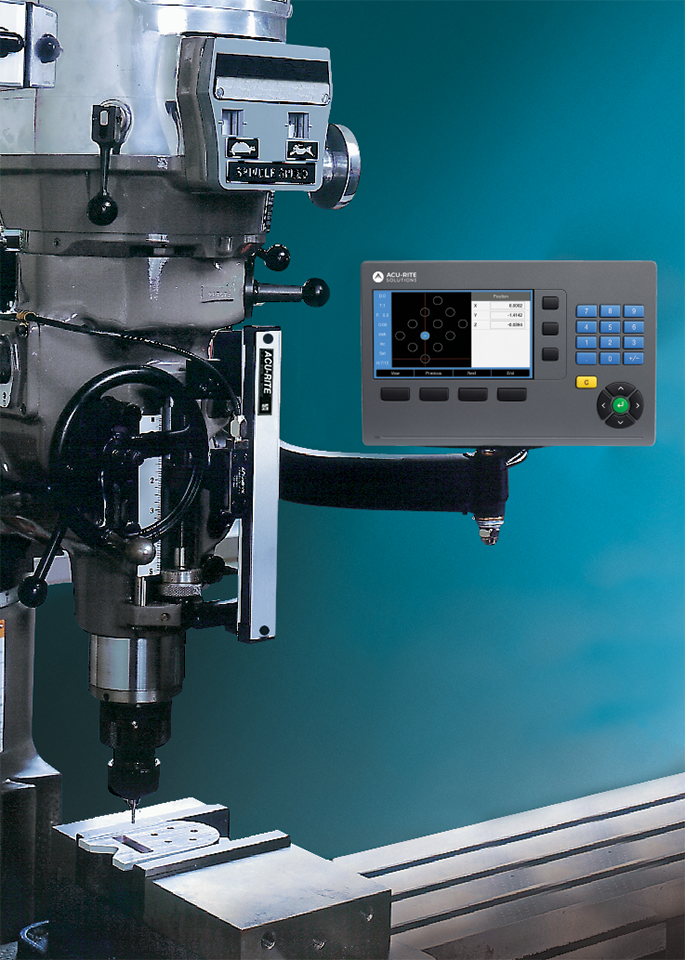
Mills, vertical boring mills and universal horizontal/vertical mills. Most system retrofits will require either a DRO100, DRO203, DRO300 or a MILLPWRG2 with a minimum of two encoders.
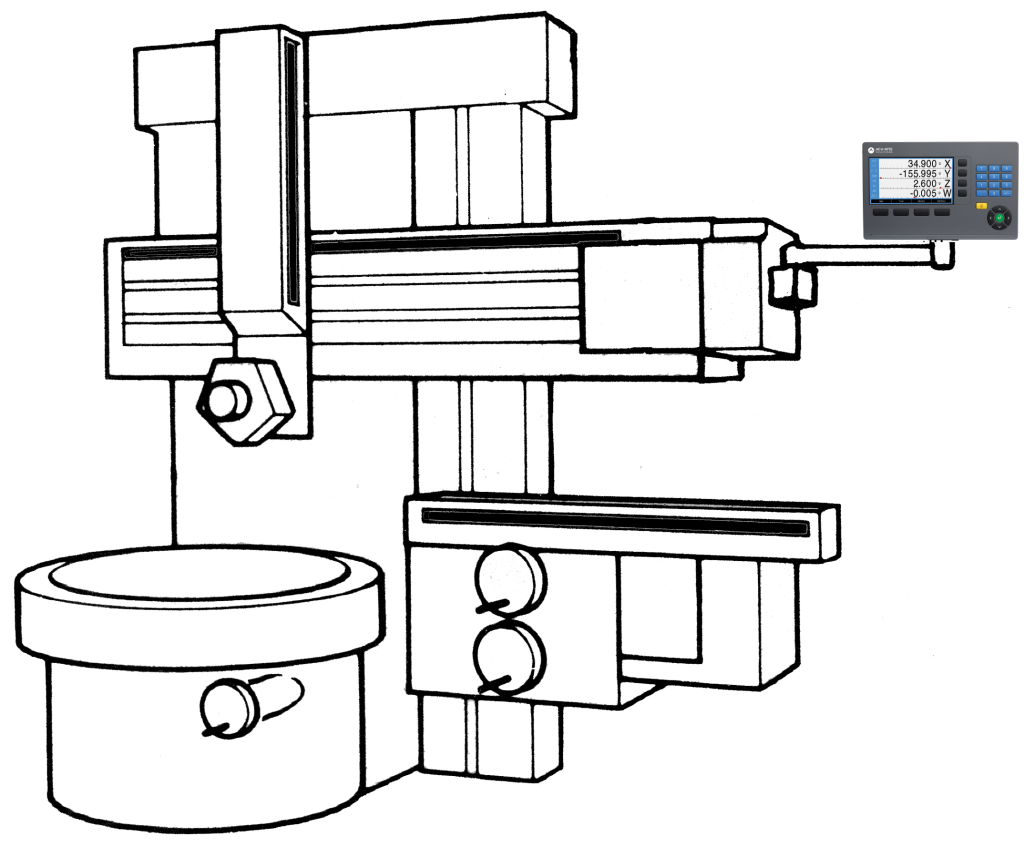
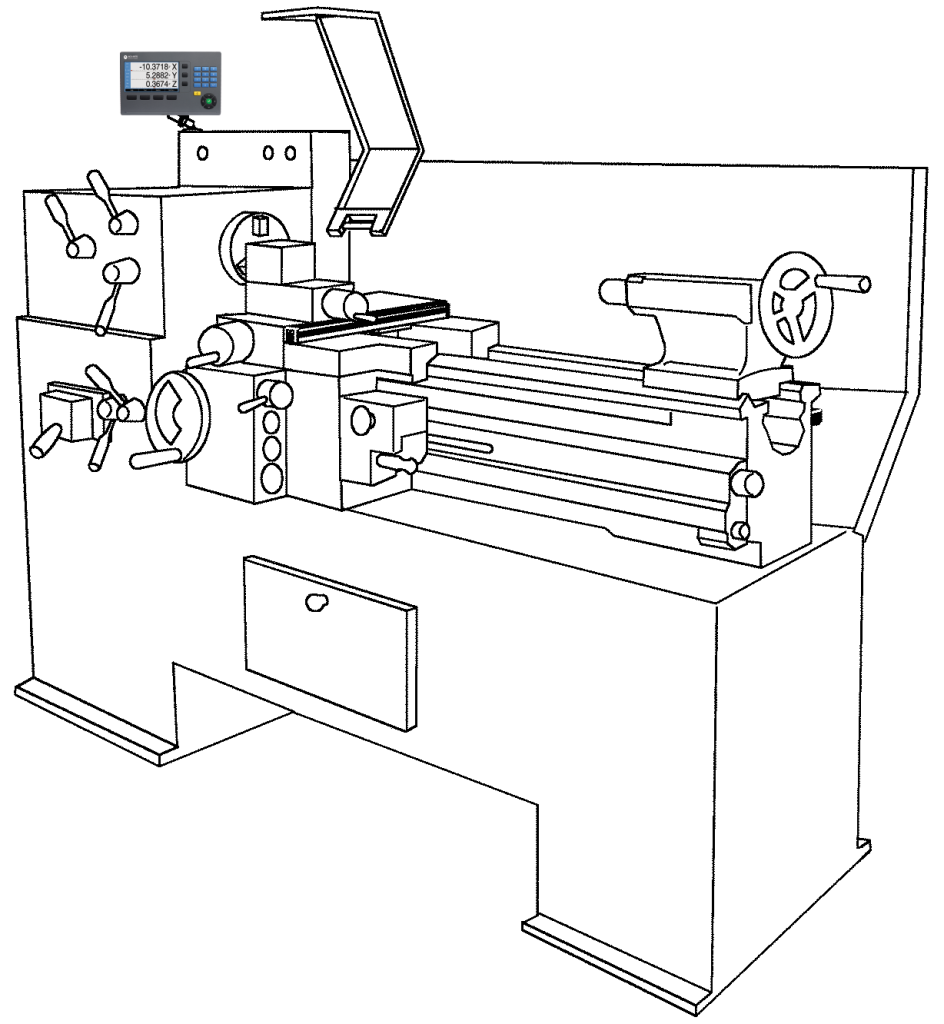
Turning
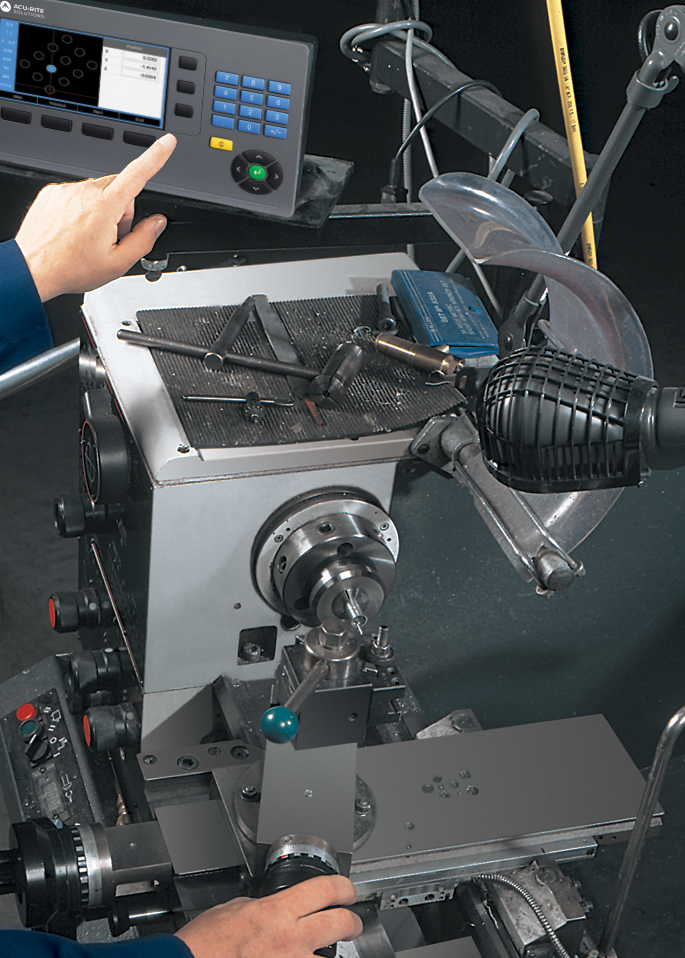
Retrofitted to almost any lathe or vertical turning lathe. Most system retrofits will require either a DRO100, DRO203 or DRO300 for turning with a minimum of two scales (don’t forget that the DRO300 can accommodate up to four (4) machine tool axes, or with an optional IB2X for up to six (6) axes). Scale resolution is normally 5μm for the Z or longitudinal axis and 1μm for the X or cross slide axis.
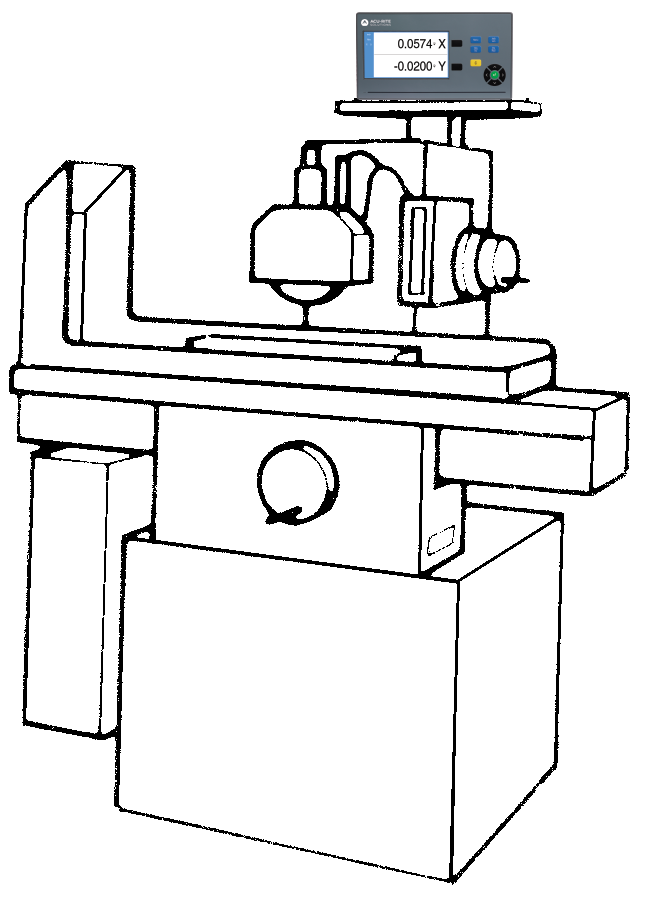
Grinding
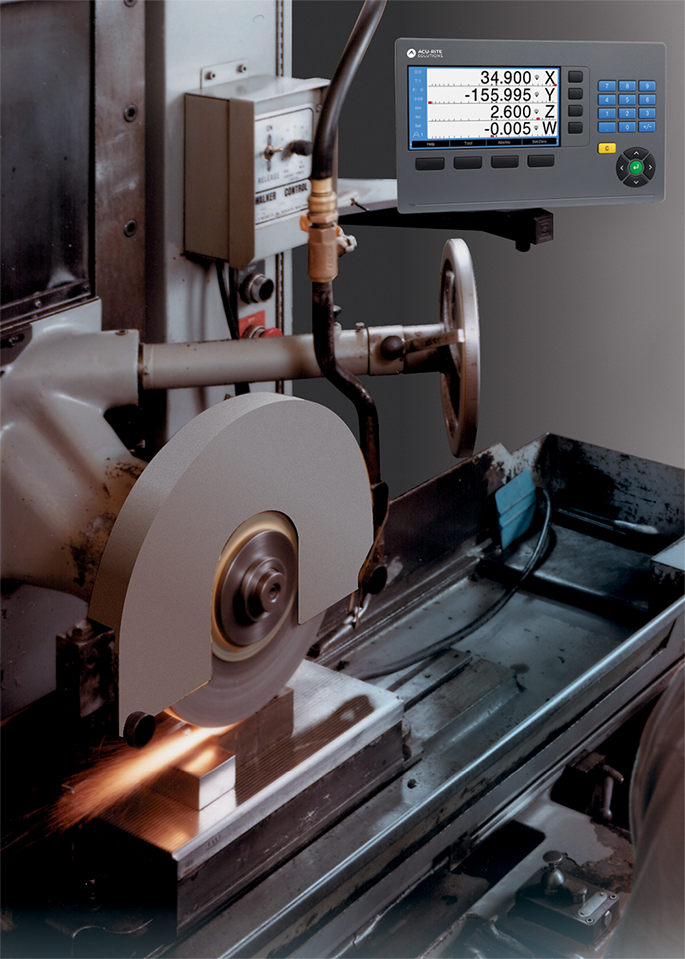
Retrofitted to almost any surface grinder. Most system retrofits will require either a DRO100, or DRO203 with a minimum of one scale. Scale resolution is usually 1μm.
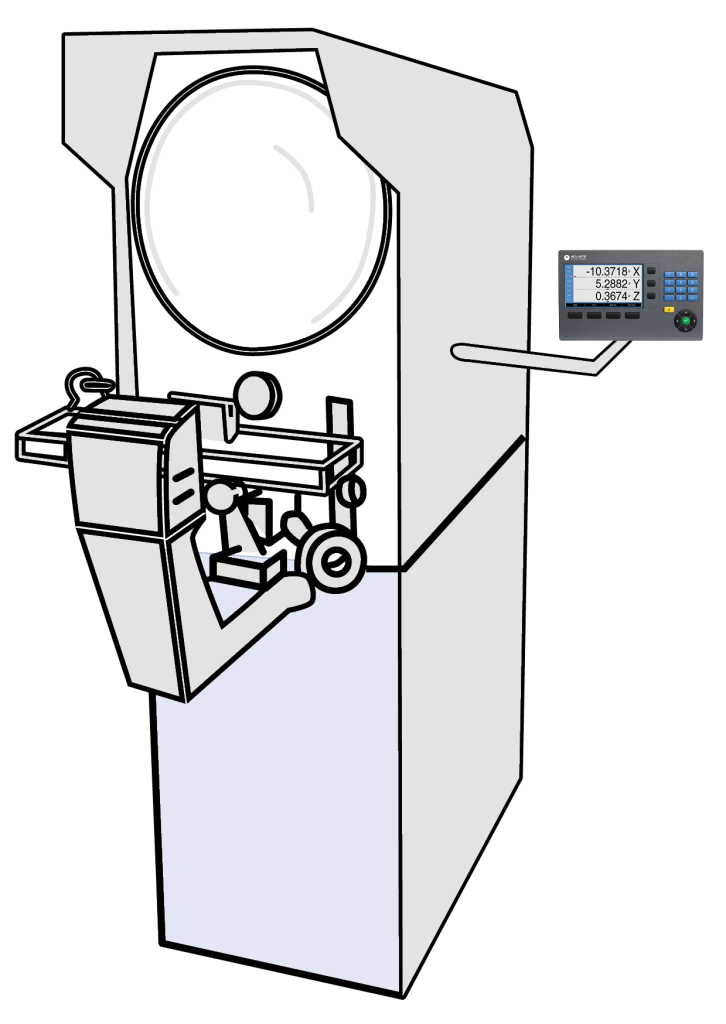
Optical Comparator
Restores the linear accuracy of comparator; eliminates dependence on accuracy of ball screw drives with inherent backlash. ACU-RITE SOLUTIONS’ Digital Readouts enhance coordinate measuring immensely and effect great savings in both time and accuracy. They require either a DRO100, or DRO203 with a minimum of two encoders (1μm for 2 axes).
FYI: How machine tool errors occur
It is common knowledge that all machine tools — new and old — contain some error in the accuracy of moving components when compared to a standard that is known to be true. This area of concern is important enough for you to learn more about these errors and why they occur.
In every machining operation, there is always some degree of error or inaccuracy due to at least one of the following machine tool deficiencies:
a. Gravity causes deflections in the machine tool structure, particularly when a heavy workpiece is placed on a machine with overhanging table or ways. A result of these deflections is called Abbe error. (The following paragraphs provide further explanation.)
b. The fit between mating surfaces is loose, because of manufacturing tolerances, subsequent wear or improper gib adjustment.
c. The ways are not scraped straight or are not aligned perfectly at assembly.
d. Driving and cutting forces cause deflections, since no material is totally rigid.
e. Temperature variations can distort machine geometry.
In addition, machine tables and ways can be forced out of alignment if you use the locks improperly. Tables that are not completely locked in position will shift from the forces of machining and eventually wear.
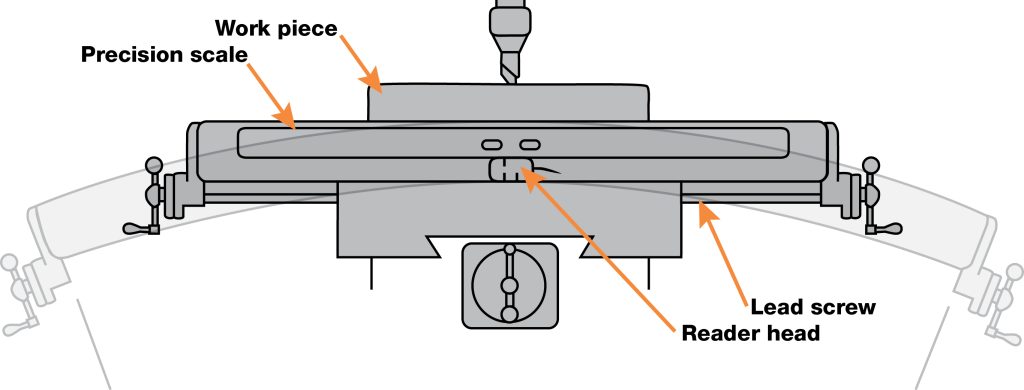
Abbe error (also called machine geometry or transfer error, see graphic below) is progressive fault occurring mainly in machine tool tables or beds. It occurs in other moving parts also, but we’ll limit our discussion here to mill tables. Gibs and table ways can wear due to an increase in pressure at the edge of the machine way, on both the knee and center of the table. This causes increased wear at these points as the center of gravity of the table moves with an increasing overhang.
The shift of weight is gradual as the table moves from the center; therefore the wear is also gradual. The result is the formation of an arc shape along the table and knee, concave to the ways. Pressure of the gib against the way causes the gib to wear. Often when a short travel is used, retightening the gib causes localized wear of the way.
The scale attached to the table measures its horizontal motion with respect to the fixed reading head. A worn table, however, follows the curvature of the arc, resulting in an error in the movement of the workpiece relative to the cutter. In the case of the milling machine, the workpiece is moving too far.
ACU-RITE SOLUTIONS readout systems include automatic linear error calculation and stored error compensation factors in all systems as a standard feature. Both linear and non-linear error compensation can be entered into the readout. Error compensation corrections of up to ±99999 ppm (parts per million) can be entered.
Precision glass scales
ACU-RITE SOLUTIONS digital readout systems are application-specific readout systems for the manual machine tool industry. Each system includes a DRO100, DRO203 or DRO300 readout, a minimum of one precision glass scale and associated hardware used in the mounting of the readout and precision glass scale(s).
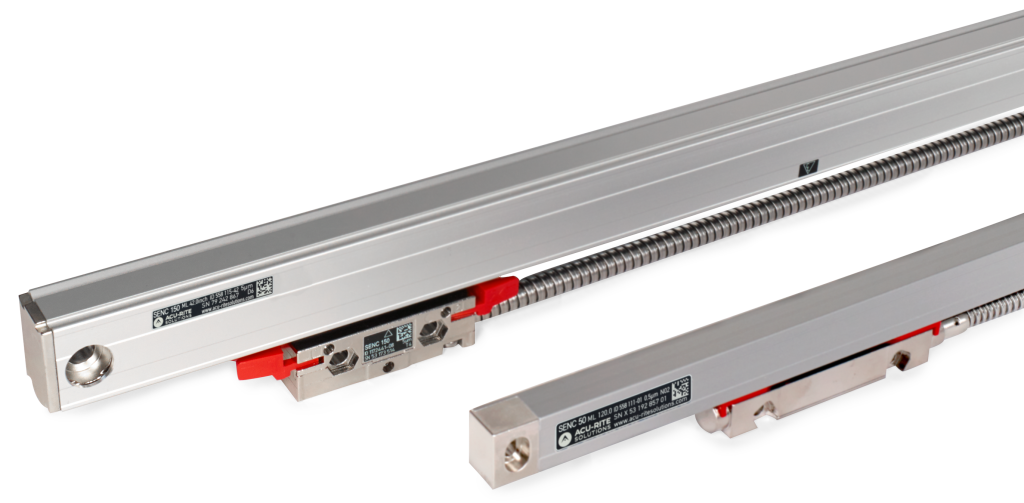
Scales are mounted to the motion axes and provide positional feedback to the readout to inform the operator of tool/workpiece position. The scale is composed of two (2) integral components; the precision glass scale and the electronic reader head. ACU-RITE SOLUTIONS premium precision glass scales consist of chromium lines on a glass substrate with distance encrypted reference marks. The reference mark is used to recover tool/workpiece position upon power up or after an accidental loss of power or ending work for the day. This capability is called Position-Trac and is available on the SENC 150 Scale, and the SENC 50 Scale.
Precision glass scales are used because of their high accuracy and stability. Glass resists change in size, shape and density regardless of variations in temperature. This quality provides glass scales with exceptional accuracy for travel lengths from 1″-120″.
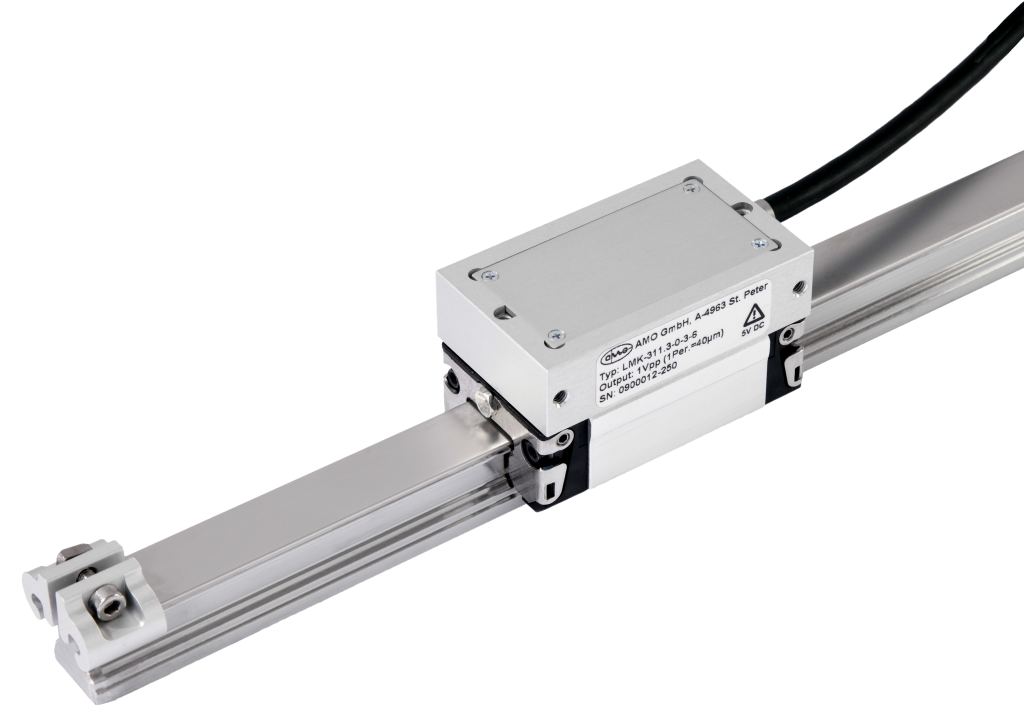
Long length inductive scales
For travel lengths over 10 feet, a LMF9310 is available from 10 up to 60 feet. ACU-RITE SOLUTIONS scales are easy to install and eliminate errors associated with machine wear and backlash.
The economics of readouts
When it comes to seeing the actual benefits of adding a readout to a manual machine tool often the most convincing argument is the rise in productivity due to increased utilization, output and accuracy. Jobs that might have been vended out due to a lack of time and capability can be kept in-house with a readout system. Similarly, jobs that were turned down or quoted too high in the past can be handled due to the increased capability of the shop.
Profit centers are what some shop managers call machines retrofitted with readouts. Others say their DROs “paid for themselves in just 90 days in reduced scrap alone. Everything saved now is pure additional profit!”
It is easy to spout praises once a readout system is working for you, but how do you help the potential buyer justify the need to make that first purchase? There are at least two methods you can use to figure out the potential gains. One annual dollar savings method; the other is the purchase payback method. Both can be represented by mathematical formulas.
Calculating annual savings
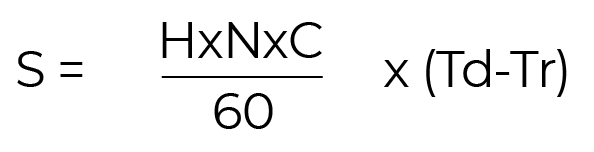
S = annual savings
H = number of working hours per year
N = average number of moves per hour
C = cost per hour of operator
Td = indexing time in minutes using dials or rods
Tr = indexing time with digital readout
Let’s assume that your machine operator works 2000 hours a year (H) and makes an average of six moves each hour (N).You pay the operator an hourly wage of $10.00 (C). He “eyeballs” his moves at an average of 2.75 minutes per move (Td), or uses a DRO, averaging 1 minute each move (Tr).
When these values are inserted into the formula, the result is persuasive:
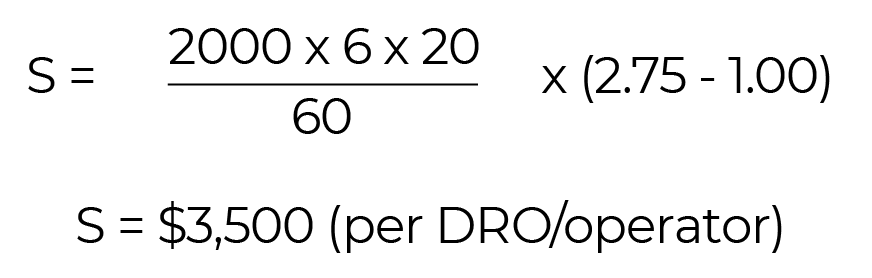
As you can see, the reduced time (or increased speed) for the job with a DRO-equipped machine is enough by itself to warrant the purchase (averaging $1900). A shop working two or three shifts will increase its relative number of moves proportionately, and yield savings significantly above our $3,500 example.
When you install a digital measuring system on most machine tools, you can expect an annual return of at least 500% on your investment. The exact return in both dollars and time depends, of course on the type of machine and its usage.
Below is a basic formula which you can use for justification or a purchase.
Calculating payback
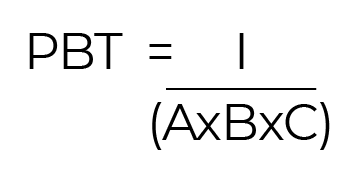
PBT = Payback time
I = Dollars invested
A = Machine revenue in $/hr
B = Hours per day worked
C = Productivity increase in %
Putting this formula to work is simple. We’ll use an investment figure (I) of $1895, the cost of installing an average system on a small mill. Using a machine revenue rate of $20 per hour (A) for an 8-hour shift (B) we can assume a typically conservative increase of 25% in productivity (C).
When these figures are plugged into the formula, the result is:
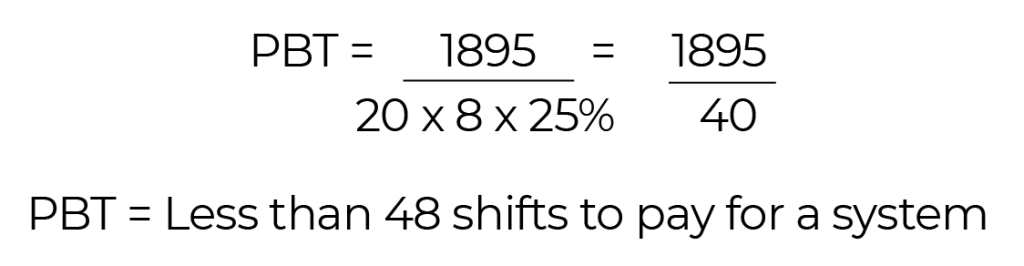
If your shop operates 52 weeks a year, the annual return will be 6.5 times your investment (5.5 times after payback) or $8,800 the first year for a one-shift shop.
Moreover, a machine utilization of three shifts per day will produce a proportionately greater return. Well worth the investment.


