
 English
  Spanish
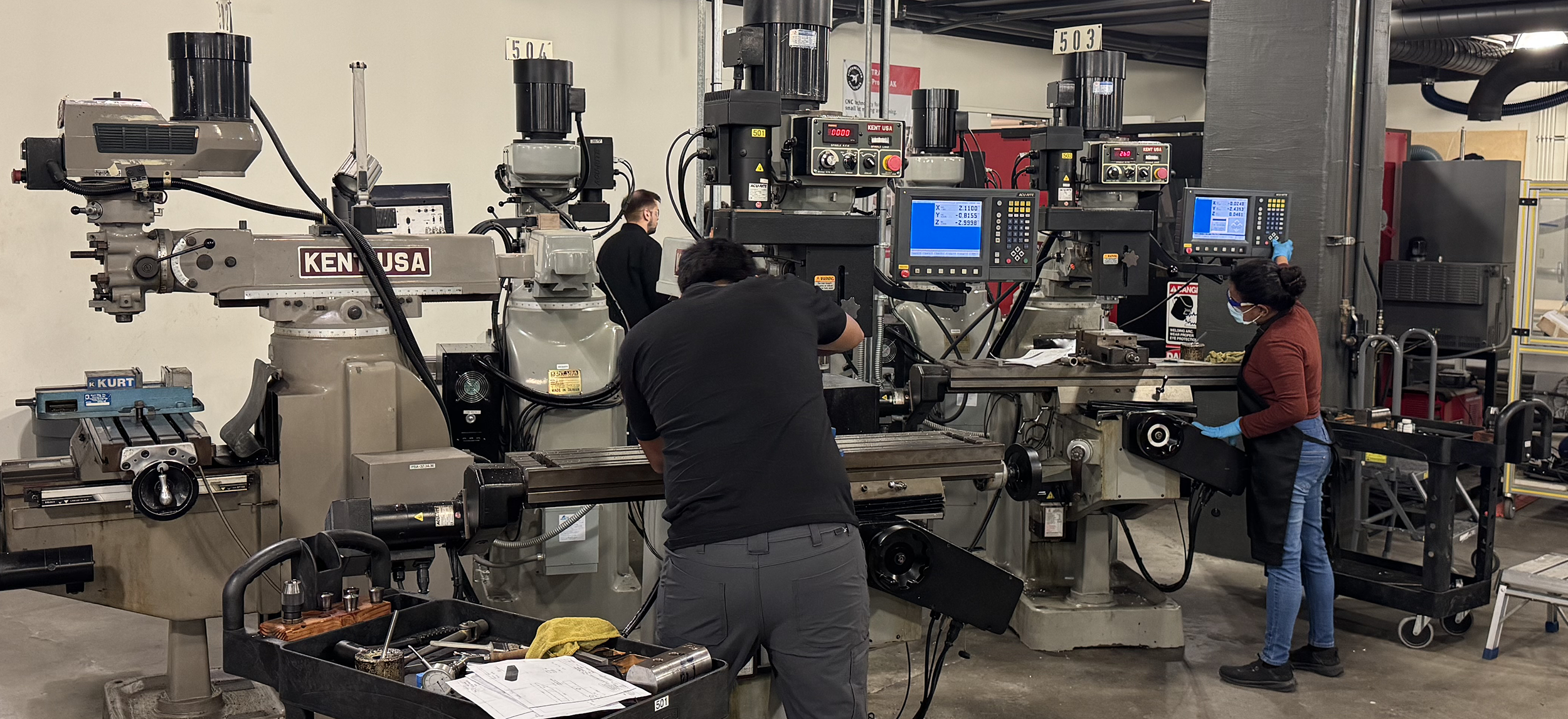
In Southern California, where manufacturing continues to evolve alongside advanced technology, ACU-RITE SOLUTIONS plays an important role in supporting the next generation of machinists, CNC operators, and programmers through its collaboration with El Camino College. As a valued member of the HEIDENHAIN family of brands, ACU-RITE SOLUTIONS brings decades of precision measurement expertise and continuous innovation to educational environments, helping bridge classroom learning with real-world manufacturing demands.
At El Camino College, that partnership supports a machine shop program serving a diverse mix of learners, from recent high school graduates eager to enter the workforce quickly to adults returning to school to build new skills or advance their careers. Regardless of background, participants follow a structured path that begins with core machining fundamentals and steadily builds toward advanced manufacturing technologies used throughout industry today.
One Platform, Many Learning Opportunities
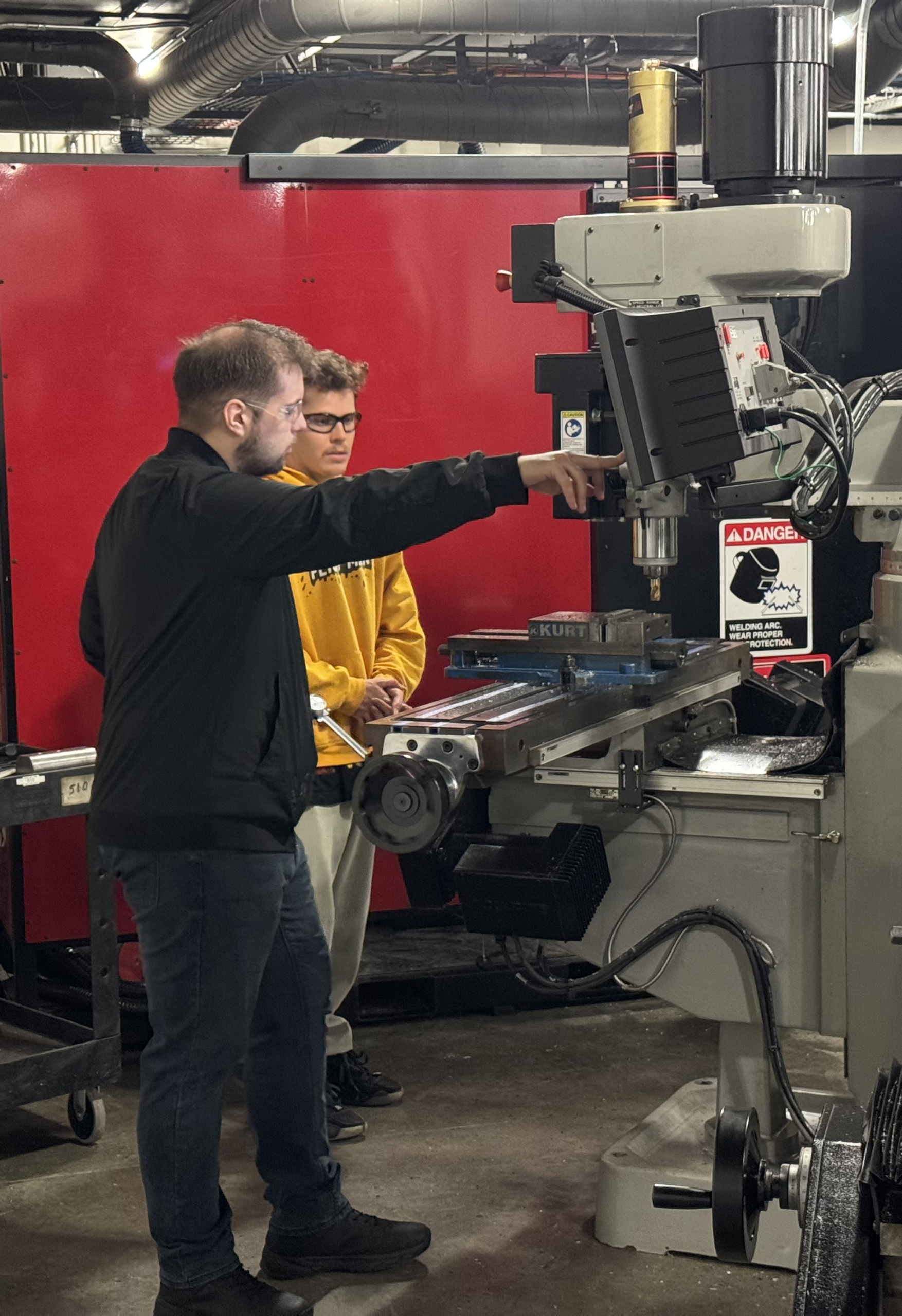
MILLPWR systems support hands-on teaching by allowing learners to experience multiple machining approaches without switching platforms. They can begin by manually turning handles and developing a physical understanding of how milling works—how tools engage material, how feeds and speeds affect results, and how setup decisions influence accuracy. Once those fundamentals are established, learners transition directly into conversational programming and CAM-based CNC machining on the same equipment.
This progression reinforces learning rather than disrupting it. Learners gain confidence more quickly because they build on familiar machines rather than starting over with each new concept. Miller notes that this continuity helps students grasp programming, setup, and machining concepts more quickly, while also demonstrating how CNC enhances efficiency and capability without replacing foundational skills. As he explains, the real value shows up in the classroom itself:
“The ability to run a class full of students through everything from manually turning handles to running complex CNC programs on the same equipment truly multiplies our teaching capabilities.”
Just as important, the skills developed on MILLPWR systems translate directly to local industry needs. El Camino College serves a region with employers ranging from large aerospace manufacturers to small job shops, and graduates must be adaptable to succeed. Training that blends strong manual fundamentals with CNC proficiency prepares learners to step into diverse manufacturing environments with confidence.
Consistency, Reliability, and Shop-Wide Performance
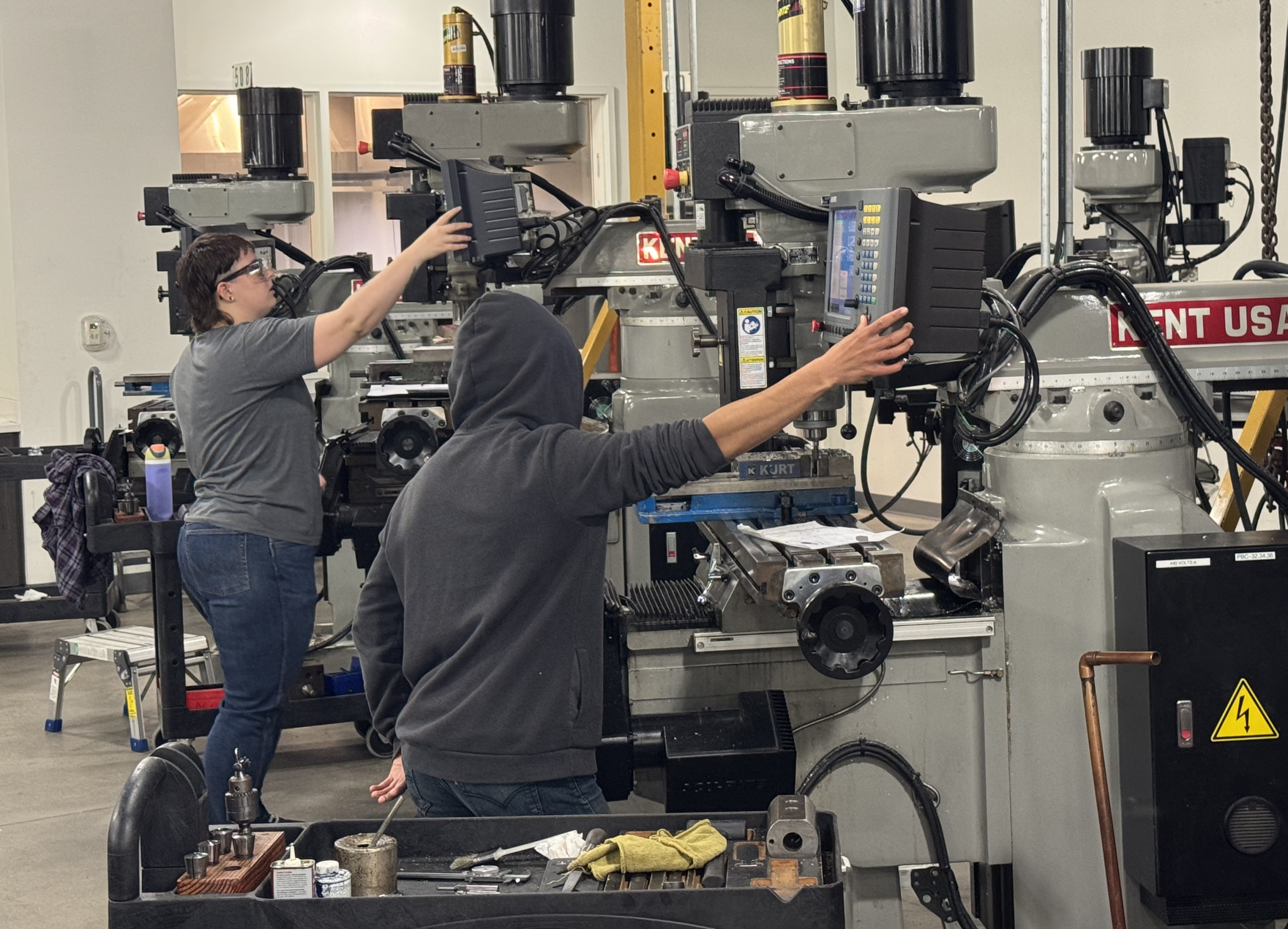
From a shop-management perspective, standardization plays a critical role. With 10 MILLPWR systems in the lab, instructors can maintain consistency across classes and reduce complexity during instruction. The systems’ reliability and durability—hallmarks of the HEIDENHAIN family of brands—are especially important in a learning environment, where machines are used constantly as participants build their skills.
This consistency also supports instructional efficiency. Learners can move between machines with minimal adjustment, and instructors can focus on teaching rather than troubleshooting. The program supports approximately 75 to 100 students in machine shop courses each year, making dependable, consistent equipment essential to keeping labs running smoothly. Looking ahead, Miller notes that upgrading remaining older systems to newer MILLPWR II models would further enhance uniformity and expand the program’s ability to teach advanced CAM programming.
The Human Impact Behind the Machines
While technology enables the curriculum, individual experiences ultimately define the program’s value. Miller recalls students who entered the machine shop with no prior machining experience, sometimes after switching from an entirely different field of study. Watching their confidence grow as they progress from manual operation to programming and running complex parts is one of the most rewarding aspects of teaching.
Learners are often especially excited when they complete their first successful project on MILLPWR. Many assignments are designed to produce functional tools or useful parts, giving them something tangible to take home and proudly share. Those moments—seeing a finished part come off the machine—help solidify both technical skills and personal confidence.
In some cases, that confidence carries directly into the workforce. Miller has seen graduates move into machining roles where MILLPWR or similar technology is already in use, making the transition from classroom to shop floor smoother and reinforcing the real-world relevance of their training.
A Partnership Focused on the Future
For El Camino College, the relationship with ACU-RITE SOLUTIONS extends beyond equipment alone. Ongoing support, backed by HEIDENHAIN’s broader technology ecosystem, helps prevent extended downtime and ensures learners maintain access to critical training tools throughout the academic year. Miller views the collaboration as a true partnership, one that supports the program’s mission and helps shape future careers.
Looking forward, there is a strong interest in expanding the collaboration through system upgrades, deeper CAM integration, and increased visibility of success stories enabled by training on MILLPWR systems. As CNC education continues to evolve—particularly with the growing role of accessible CAM software—platforms that combine manual experience and CNC capability within a single footprint will remain essential.
By supporting institutions like El Camino College, ACU-RITE SOLUTIONS, together with the HEIDENHAIN family of brands, plays an important role in keeping machining education aligned with industry realities. Together, they are helping ensure that the next generation of machinists doesn’t just learn how machines work, but understands how to apply those skills confidently, efficiently, and creatively in the modern manufacturing world.


